The outside of a property is easy to ignore.
Inside a building, problems tend to get noticed quickly. A dirty floor, marked wall or damaged fitting is right in front of people every day. Outdoor areas are different. A driveway, pathway or wall can slowly become dirtier over several months without anyone really noticing.
By the time the change becomes obvious, quite a bit of grime may have built up.
This is especially common in Ireland, where regular rain and damp conditions give dirt, moss and algae plenty of opportunity to settle on outdoor surfaces.
Dirt Does Not Just Disappear
Rain might wash some loose dirt away, but it does not keep an exterior surface clean.
Water can actually move dirt around and leave it concentrated in certain areas. Near walls, kerbs and entrances, you can often see darker marks where water repeatedly runs across the same surface.
Traffic adds another layer. Cars bring dust and dirt into car parks and driveways, while busy pedestrian areas gradually collect material from footwear and the surrounding environment.
None of this happens overnight. That is why it can be easy to overlook until the surface has changed quite noticeably.
Moss and Algae Can Take Hold
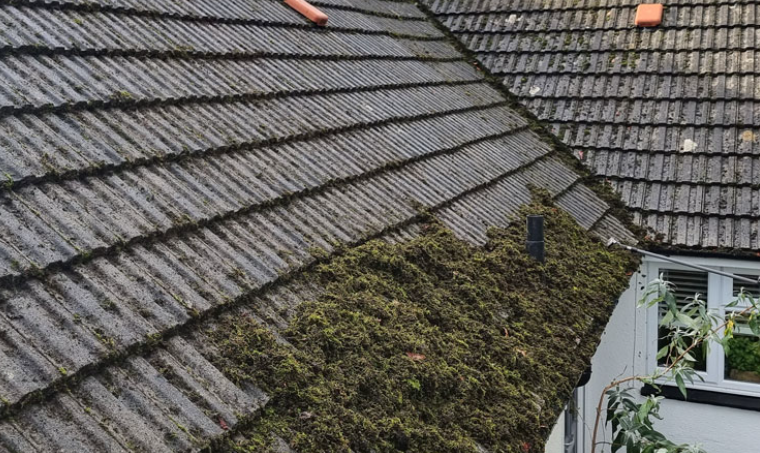
Shaded areas are particularly susceptible to organic growth.
A path underneath trees or beside a building may receive very little direct sunlight. If it also stays damp for long periods, moss and algae can gradually spread across the surface.
At first there might only be a few small patches. Eventually, the colour of the original surface can become difficult to see.
Apart from looking untidy, this can be a concern on paths, steps and other areas where people walk. A surface that is already wet becomes less pleasant to use when there is a layer of organic growth on top of it.
Some Areas Get Dirty Much Faster
Not every part of a property needs the same amount of attention.
A wall at the back of a quiet building may stay reasonably clean for a long time. The entrance, on the other hand, could be exposed to people, vehicles, rain and general traffic every day.
Car parks are another example. Oil marks, tyre dirt and general grime can gradually build up, particularly around entrances and heavily used spaces.
For commercial properties, the busiest areas are often the ones worth checking first.
The Appearance of a Building Changes Gradually
One reason exterior maintenance gets overlooked is that there is no obvious moment when a property suddenly becomes dirty.
Someone who visits the same building every day may not notice the change because it happens so gradually.
A visitor who has not been there for six months might notice it immediately.
This is particularly relevant for businesses where the outside of the property forms part of the first impression. A shopfront, office entrance or commercial premises does not have to be spotless at all times, but heavy staining and accumulated dirt can make the building look older than it actually is.
Paving Can Be Particularly Noticeable
Paving and concrete are exposed to almost everything that happens around a property.
They receive rain, dirt, leaves, vehicle traffic and foot traffic. They can also develop dark patches where water regularly collects.
Light-coloured paving tends to show this particularly clearly.
Outdoor areas around new buildings can also become dirty surprisingly quickly during the final stages of construction. Even after the building itself is finished, surrounding paths and entrances may still have traces of dust and general site activity.
Cleaning Before the Problem Gets Bigger
There is a practical reason for not allowing exterior surfaces to become heavily neglected.
A surface with a small amount of dirt on it is generally easier to deal with than one that has accumulated years of grime, moss and staining.
That does not mean every property needs to be cleaned according to a strict annual schedule. Some will need attention more often than others.
A better approach is to keep an eye on the areas that are most exposed and deal with them when there is a clear need.
Different Materials Need Different Treatment
An important point with exterior cleaning is that there is no single approach that suits every surface.
Concrete, paving, tarmac, stone, brick and rendered surfaces all have different characteristics. Older surfaces can also be more vulnerable than newer ones.
Using excessive pressure or the wrong cleaning method can cause damage rather than solve the problem.
This is one reason it is worth looking at the surface before deciding how it should be cleaned.
Pinnacle Portfolio provides power washing services in Dublin for a range of exterior areas, including commercial and residential properties.
Commercial Properties Need a Practical Approach
For a business or property manager, exterior cleaning is usually just one item on a much longer maintenance list.
There are roofs, windows, interiors, landscaping, repairs and numerous other jobs competing for attention.
The easiest approach is often to identify the areas that matter most and keep an eye on their condition.
Entrances, paths, car parks and other high-use areas are usually more noticeable than parts of the property that few people see.
Dealing with those areas when they need attention can help keep the property looking maintained without turning exterior cleaning into a constant task.
Keeping the Outside in Good Condition
Outdoor surfaces are always going to collect some dirt. That is simply part of owning or managing a property in Ireland.
The aim is not to prevent every mark or stain from appearing. It is to stop normal weathering and dirt from being allowed to build up to the point where the property looks neglected.
A quick inspection every so often can tell you quite a lot. If paths are becoming dark, moss is appearing in shaded areas or entrances are starting to look noticeably dirty, it may be time to do something about it.
Keeping on top of those areas can be much easier than waiting until the entire exterior needs attention at once.
For more information about cleaning and property maintenance services in Dublin, visit Pinnacle Portfolio.